



Table of Contents
Ever wonder where a forgotten phone or jacket ends up? Here's how ONT's Lost and Found works, what gets left behind most, and how to get your item back.
Someone left a gold kitchen sink at Ontario International Airport. Brand new, never installed.
"It was a gold kitchen sink, and it was new," says Traci Simpson, who manages ONT's Lost & Found office in Terminal 2. In the year she's run the office, she's also logged a vial of someone's ashes, a gong and a wooden family cane that had been passed down for more than a century, left behind in international arrivals. Simpson tracked down the family and got it back to them.
That's the job in a nutshell: catalog the strange, chase down the sentimental and reunite as many people as possible with the stuff they didn't mean to leave behind. In the first six months of 2026 alone, ONT's Lost & Found processed nearly 4,200 items and returned 833 of them to their owners.
"I always say when you lose an item, report it on the first day," Simpson says. "You have a better chance of finding the item if you're able to get your inquiry early."
What Gets Left Behind Most
Here's what actually piles up at ONT, straight from the Lost & Found office in the Terminal 2 office located behind the Information desk.
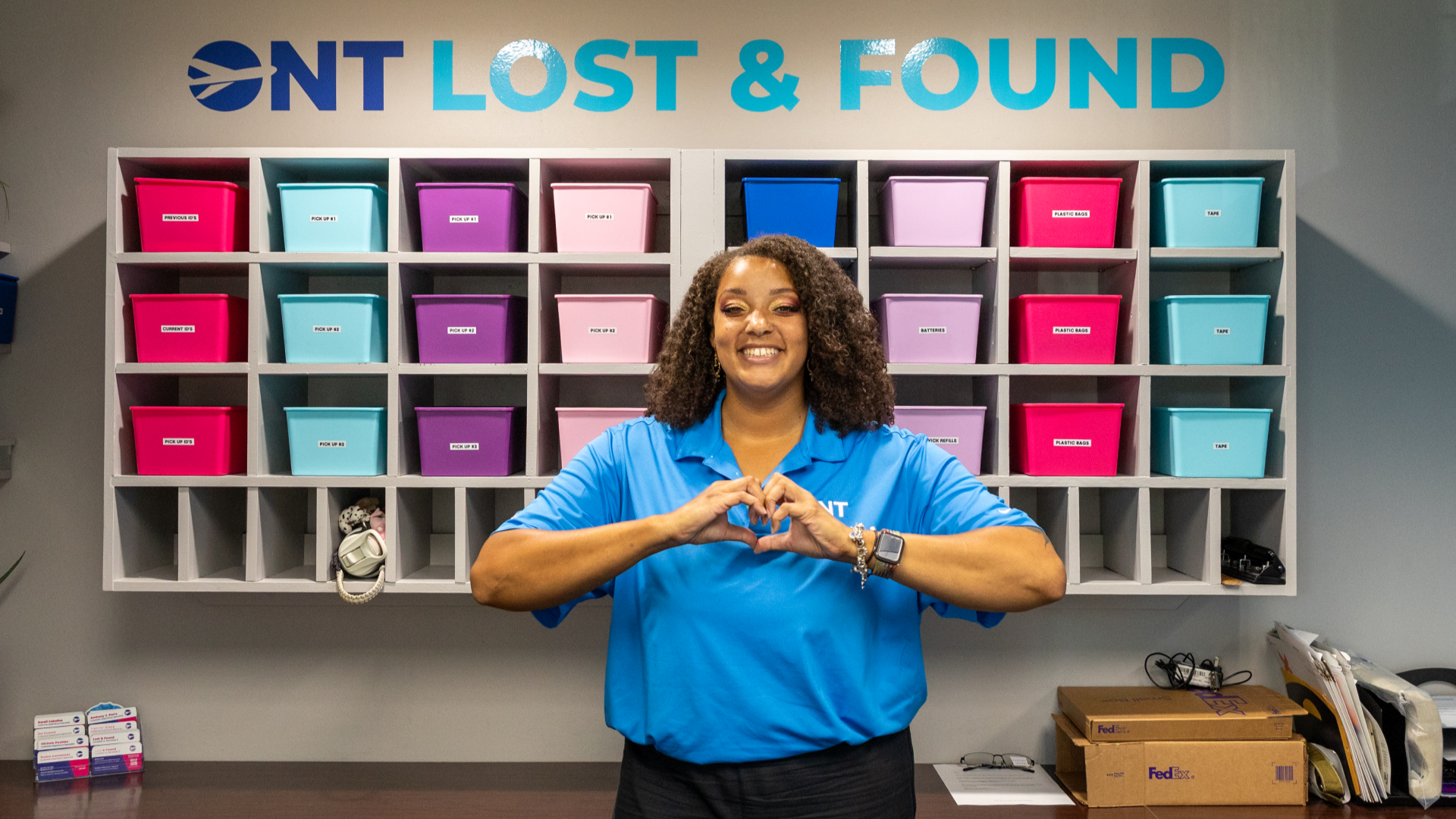
The most common item people lose is a driver’s license, says Simpson, as she pulls out a stack at least two inches thick of licenses from just the previous month.
She has bins labeled “Previous month” and “Current IDs” on the wall behind her counter to easily track lost cards.
Here’s a breakdown of other common items:
Item | 2025 | 2026* | Tip |
|---|---|---|---|
Driver's licenses | 746 | 357 | Report it fast. IDs get shredded if unclaimed after 90 days |
Passports & Passport cards | 100 | 68 | Enable Lost Mode so a finder gets your contact info automatically |
AirPods | 524 (*186 were AirPods) | 234 (*108 were AirPods) | Scan the security bins, gate seating area before you board your plane |
Jackets | 402 | 165 | Add contact to anything that matters to you |
Canes | 45 | 26 | Low value, low urgency, but still worth a quick call |
*First six months of 2026
TSA estimates that approximately 90,000 to 100,000 items are left behind at checkpoints each month nationwide.
For all of 2025, the ONT office processed 9,100 lost items. Only 1,500 were ever claimed.
"We're a busy little office," Simpson says. "Small but mighty."
How ONT's Lost & Found Actually Works
Items left on the plane or near the departing gate are the airline's responsibility.
Items that come from a TSA checkpoint, airport police, the Information desk or an honest traveler who found it on the floor are processed by Simpson.
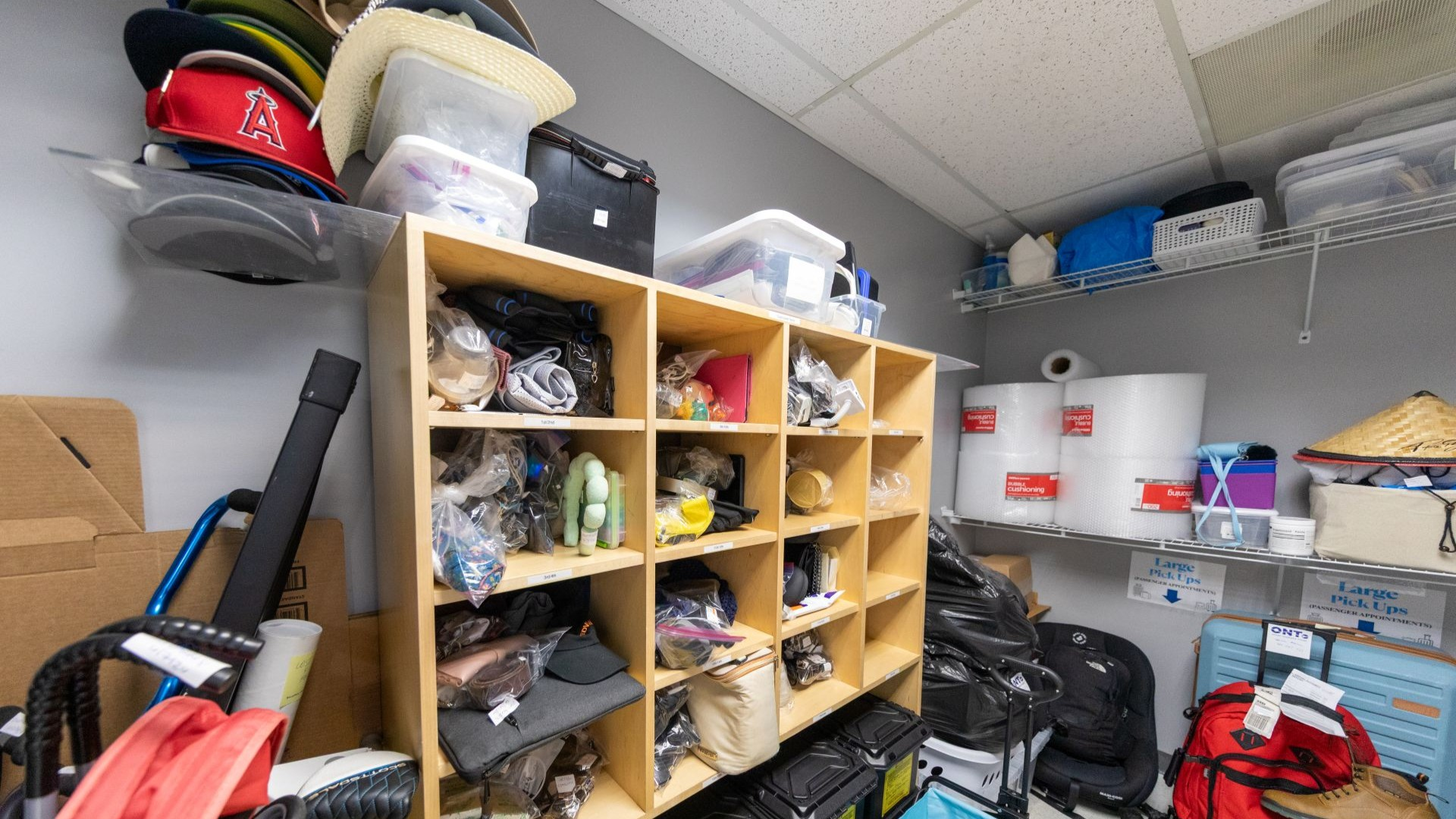
Every lost item is logged into ONT's Lost & Found system, and stored in the office for 90 days before donation or disposal.
Simpson catalogs everything with as much detail as possible, down to photographing the contents of a lost purse item by item, so a phone call can match it fast.
“We always encourage everybody to submit an inquiry. If it ends up in our office and in our system, it will typically match it,” she said.
The ONT Lost & Found doesn’t always have lost items. Here’s a breakdown of when they might get lost items and when they don’t.

Lost Something at ONT? Here's What to Do
If you call the day you lose an item, Simpson recommends contacting TSA directly for items not lost on the plane or at the gate, since the item could still be in their possession.
If the traveler doesn’t mind waiting, then they can submit an inquiry online or by phone, and she can take down the information. When the items are picked up the following morning, she can work to reunite the passenger with the items.
Passengers can connect with Simpson to retrieve their lost item at the office.
“Now and again people will be standing at the door when I get in,” she said, adding she usually has more than a dozen calls over the weekend with inquiries.
- Submit the online Lost & Found form. It's available in English and Spanish, and it's the fastest way to get your item into Simpson's queue.
- Call before you drive to the airport. The number is 909-544-5128. The office is periodically closed during the day even during posted hours, so a quick call saves you a wasted trip.
- Know the hours. The office runs Monday through Friday, 9 a.m. to 6 p.m. PT, and is closed on weekends and holidays.
- Make an Appointment. Schedule a pickup between 7 and 8:45 a.m. on weekdays. Appointments are available during office hours. Since our customer experience specialists are available after business hours, travelers can also schedule pickups until 10 p.m.
If you have someone in the area you want to designate, it could be whoever you trust, but Simpson said they will need I.D. verification.
The other option is mailing to the traveler at their expense. How that works is the passenger will provide an email address; Simpson or a customer experience specialist will then weigh the item and email the passenger with the next steps to fill out the shipping address and payment information. The passenger can decide how quickly they want the item delivered.
Once payment has been processed, Simpson will get an email, and she’ll send it out for delivery.
What Happens to Items No One Claims
Once the 90 days run out, most unclaimed items go to donation. Government documents like Social Security cards, passports and birth certificates get routed back to the issuing agency.
Driver's licenses and credit cards get shredded. Everything else — clothing, suitcases, water bottles — moves on to a new home.
That’s why Simpson advises you to take a couple of steps before you get to the airport to help you retrieve your items more quickly.
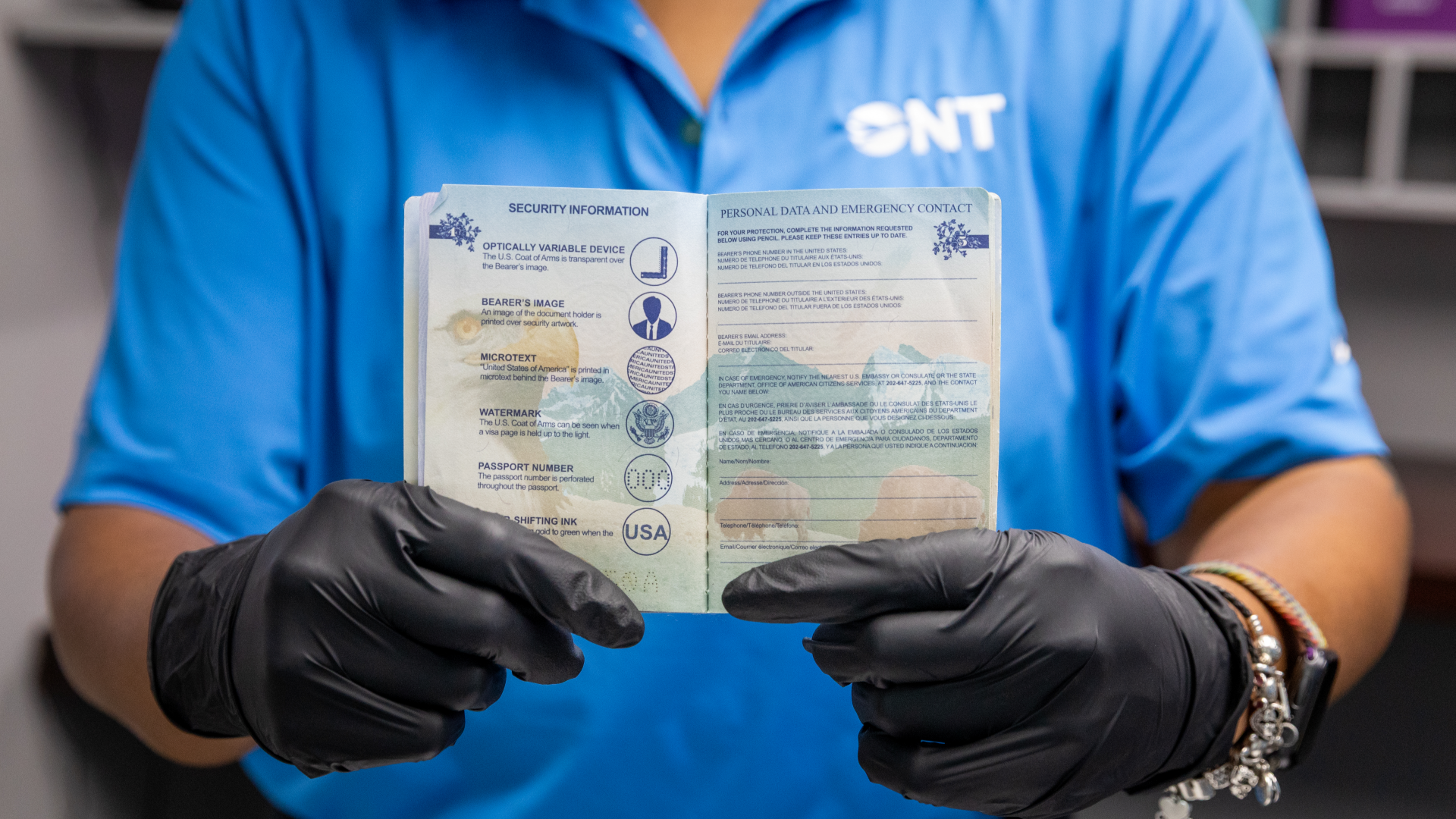
Passports: In the Personal Data and Emergency Contact section (typically on page 4), where you can add your information: first and last name and address. The recommendation is to do this in pencil to allow for future changes.
iPhone: Download the Find My app, which allows you to mark a device as lost to lock it. If anyone finds it, then it will display a message directing them to call or email your emergency contact.
When a lost phone is brought into Lost & Found, it's often locked, which can make identifying the owner a little tricky.
“If the owner has their Medical ID set up, we can access it from the lock screen while attempting to identify the phone. It's a great place to include a first and last name, as well as at least one emergency contact,” she shared.
AirPods: Put them in lost mode. If someone finds your earbuds and tries to sync them to their phone, it will notify you that they are not your AirPods and provide contact information.
And lastly, Simpson says AirTags in luggage are always great, but she also recommends adding a card inside your luggage with contact information.
How to Avoid Leaving Something Behind
Take your time, Simpson says, citing the number of times folks have left their IDs in the TSA bins.
Before you walk away from the checkpoint, make sure nothing is in the security bins. Also double-check that your ID or passport is in your possession.
Once you get through TSA, you’ll likely stop and grab delicious food from one of ONT’s restaurants while you wait. Or sit back and wait by the gate. Whether it’s a restaurant or waiting at the charging stations, do a quick scan of your surroundings one last time before you leave.
On the plane, remember to check the seat-back pockets and snap a photo of your seat area before you get up. It can help the airline find your items faster. This guide, even if you aren’t a first-time flyer, can be helpful.
Airports move fast and so do everything you're carrying through them. A little awareness at security, at the gate and on the plane goes a long way.
“We don’t always have their items, but people are grateful just hearing from me and being able to talk to a human about their situation,” Simpson said with a friendly smile.
Trending Posts

Contact ONT
Have questions for the ONT team? Click the link below for multiple ways to connect with us.